Mara Spike raises $7M to develop counter-UAS technology
Mara secures $7M in a pre-seed round led by Khosla Ventures for its Spike system, targeting FPV drone swarms.
Funding Announcement
Mara has successfully raised $7M in a pre-seed funding round led by Khosla Ventures. The funding aims to propel the development of Mara's Spike counter-UAS system, designed to combat fiber-guided FPV drone swarms. Other participants in the round include a16z Speedrun, Night Capital, Palmdrive, Protagonist, Freedom Fund, and Indicator Fund. Mara plans to transition the Spike system from field testing to deployment by the end of 2026.
Context: Counter-UAS Technology
The Spike system addresses a growing challenge in modern warfare: the increasing capability and accessibility of FPV drones. These drones, which can cost only a few hundred dollars, possess the potential to disable high-value military equipment. Recent conflicts, such as those in Ukraine, have underscored the importance of effective counter-UAS technologies. Ukrainian military leaders have reported that a large portion of battlefield casualties are due to drone attacks, highlighting the urgent need for innovative solutions.
The Spike System
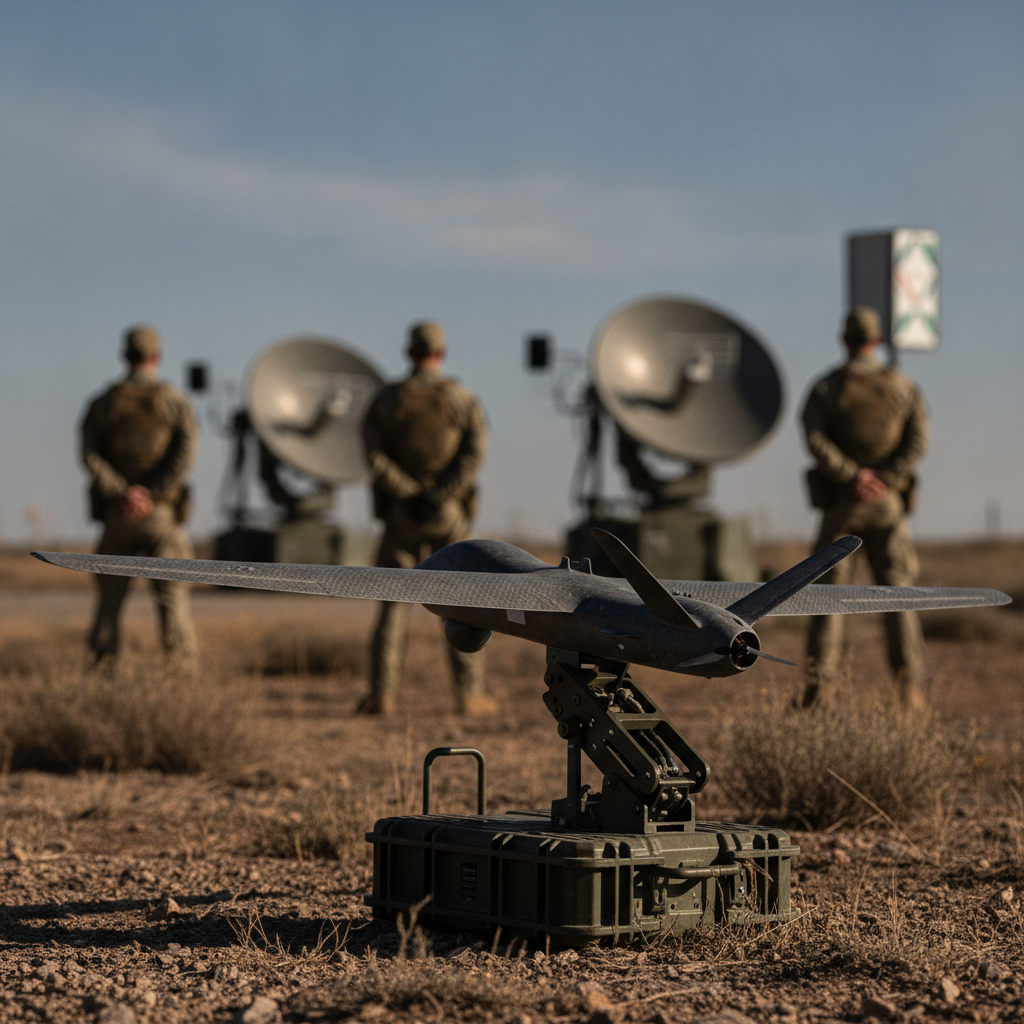
Mara's Spike system consists of two primary components: Spotter sensors and Seeker interceptors. Spotter sensors are equipped with visual and acoustic detection capabilities, aided by optional radar and in-house AI. The Seeker interceptors are 250-gram drones capable of reaching speeds of 200 kilometers per hour. These interceptors are launched from tubes and guided by onboard intelligence to neutralize threats autonomously. The system's modular design allows for significant flexibility in deployment.
Industry Need and Innovation
Traditional counter-UAS methods, such as jamming and single-sensor systems, are increasingly ineffective against modern threats. FPV drones utilizing fiber-optic links are immune to traditional electronic warfare tactics, necessitating new approaches like Mara's Spike system. By distributing defense capabilities across multiple nodes, Spike aims to provide a more robust protection strategy against drone swarms, thus reflecting a strategic innovation within military technology.
The Broader Implications
The shift from jamming to kinetic swarm defense represents a significant transition in military tactics and technology. As conflicts evolve, so too must the capabilities of defense systems. The ability to protect against relatively inexpensive drones with high cost-effective defense measures offers a tactical advantage on the modern battlefield.
Future Outlook
Looking forward, Mara's successful deployment of the Spike system could influence broader applications of distributed defense mechanisms. Furthermore, the continued evolution of UAV technology will likely spur ongoing advancements in counter-UAS solutions. Watching how military forces integrate these new technologies will be crucial in understanding future warfare dynamics.
Conclusion
Mara's $7M funding round underscores the critical nature of innovation in defense technology. As the utilization of drones continues to expand, the development of systems like Spike becomes increasingly pertinent. Continued investment and innovation in this space will likely pave the way for enhanced defense capabilities globally.
Sources
- StartupHub.ai: Mara Spike counter-UAS system raises $7M